Which hardwood pattern catches your eye – the broken zigzag of herringbone or the continuous arrows of chevron? This herringbone vs chevron pattern choice has been captivating homeowners for centuries, with both designs first appearing more than two millennia ago. These wood floor patterns aren’t just trendy – they have serious history behind them. The herringbone pattern in wood flooring dates back to 1539 at the Chateau de Fontainebleau in France, while chevron patterns appeared in ancient Greek pottery and Middle Ages heraldry.
Here’s what makes each pattern special for your home. Herringbone creates a geometric look that works beautifully in modern spaces, while chevron gives you that continuous, flowing pattern with a sleek feel. Both patterns have gained popularity in high-end homes recently, and for good reason. Your choice between the balanced composition of herringbone or the symmetrical zigzag of chevron will change how your room feels completely – chevron brings that luxurious, modern atmosphere while herringbone can make a space feel more intimate.
We’ll walk you through the key differences between these two classic hardwood flooring styles to help you choose the pattern that fits your home and personal style perfectly.
Design and Construction Differences

Image Source: Luxury Flooring
The construction details tell the real story between these two patterns.
Both patterns might look similar at first glance, but the way the wood planks are cut and installed makes all the difference. Herringbone floors use rectangular planks cut to the same dimensions with straight edges, placed at precise 90° angles to each other. This creates that characteristic broken zigzag pattern that looks like a fish skeleton.
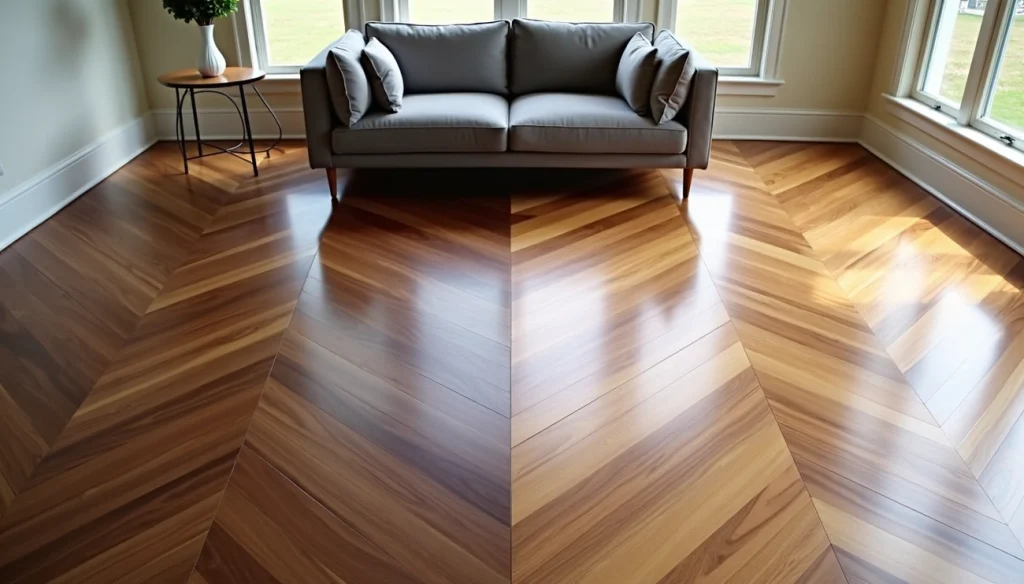
Chevron flooring works differently. The planks need ends cut at an angle—typically 45° or 60°—so when two boards meet, they form a perfect point. This creates a continuous V-shaped pattern running across the floor like a series of arrows. Chevron patterns show clean, symmetrical lines throughout the surface length, giving a more defined geometric appearance.
Installation requirements vary considerably between these custom hardwood patterns. Herringbone patterns start from the center of the room with planks laid at a 45-degree angle to the walls. This staggered layout adds movement and depth, creating a final appearance that shows more complexity and classic elegance.
Chevron flooring can be installed either parallel to walls or diagonally. This results in a more streamlined, contemporary look with sharp points directing the eye across the space.
Installation and Material Considerations
Getting these patterns installed right takes careful planning. Chevron flooring demands more precision since each board must be cut at specific angles (typically 45° or 60°) to create perfect V-shapes. Herringbone installation stays more straightforward with rectangular pieces placed at 90° angles.
Material waste matters for your budget and the environment. Herringbone creates more waste due to its irregular layout. Chevron’s uniform cuts and continuous patterns typically result in better material utilization, making it a more efficient choice.
You can choose between solid or engineered hardwood for both patterns. Engineered options offer real advantages, especially in tricky spaces. The multi-layered construction with a hardwood veneer top handles temperature changes and moisture much better.
Engineered versions work great for:
- Installations over concrete slabs
- Basement areas
- Spaces with radiant heating systems
Their stability prevents warping or shrinkage problems that can affect solid wood in these conditions.
Both patterns cost more to install than traditional hardwood floors. Chevron installation runs higher since it requires additional cuts and precise alignment. The extra precision pays off in the final result, but plan your budget accordingly.
Durability, Maintenance, and Cost
When it comes to durability, you’ll get the same performance from both herringbone and chevron floors. The longevity depends on material quality, installation precision, and how well you maintain them rather than the pattern itself. Both designs handle daily foot traffic and resist scratches when properly finished.
Maintenance stays simple for either choice. Regular sweeping and occasional damp mopping with appropriate cleaners keep your floors looking pristine. Planning to install in kitchens or bathrooms? Engineered wood versions of both patterns perform better in moisture-prone areas.
Cost differences show up mainly in installation, not materials. Chevron installation requires greater precision and more complex cuts, pushing labor costs to $5-$15 per square foot. Traditional straight-lay patterns cost much less at $3-$8 per square foot.
Material costs run $4-$12 per square foot depending on wood species and quality. Pattern waste affects your budget too – herringbone creates 10-15% waste during installation, while chevron produces slightly less at 10-12%.
Both patterns make solid investments. Their timeless appeal can boost your home’s resale value. Our team at Pomona Hardwood Floors helps you choose the right custom hardwood flooring pattern that balances beauty with practicality for your specific space.
Side-by-Side Pattern Comparison
| Feature | Herringbone | Chevron |
|---|---|---|
| How It’s Built | Rectangular planks with straight edges at 90° angles | Planks cut at angles (45° or 60°) forming perfect points |
| What You’ll See | Broken zigzag pattern like a fish skeleton | Continuous V-shaped arrows across your floor |
| Installation Difficulty | Less complex with rectangular pieces | More complex – requires precise angle cuts |
| Installation Start | Center of room at 45-degree angle to walls | Parallel to walls or diagonally |
| Material Waste | Higher (10-15%) | Lower (10-12%) |
| Installation Cost | Lower range for custom patterns | Higher ($5-$15 per square foot) |
| Material Cost | $4-$12 per square foot | $4-$12 per square foot |
| Room Size Effect | Can make spaces feel smaller | Creates flow in larger areas |
| Style Feel | Geometric look perfect for modern spaces | Sleek, contemporary with luxurious feel |
| History | First seen in 1539 (Chateau de Fontainebleau) | Ancient Greek pottery and Middle Ages heraldry |
| Daily Care | Regular sweeping and damp mopping | Regular sweeping and damp mopping |
| How Long It Lasts | Depends on material quality and installation | Depends on material quality and installation |
Your Perfect Flooring Pattern Awaits
Your choice between herringbone and chevron flooring patterns comes down to your personal style and what works best for your space. Both patterns bring distinctive character to any room – herringbone offers that classic, broken zigzag design that adds personality, while chevron delivers continuous, arrow-like flow that creates luxury and movement.
These patterns might look similar at first glance, but they’re quite different in how they’re built and installed. Chevron needs more precision during installation, which means higher labor costs. Herringbone gives you more installation flexibility but creates slightly more material waste.
Both patterns share excellent durability when properly installed and maintained. Regular sweeping and occasional damp mopping will keep either floor looking beautiful for years. These styles represent timeless design choices that can increase your home’s value – they’re not just passing trends.
Think about your space before you decide. Herringbone patterns can make smaller rooms feel more intimate, while chevron creates that sleek, contemporary look. Your room size, existing décor, and personal style should all guide your selection.
For homeowners in Portland, Lake Oswego, or Vancouver considering custom hardwood flooring, working with experienced professionals ensures you’ll get the perfect result. Our specialists at Pomona Hardwood Floors can guide you through selecting the ideal pattern, wood species, and finish for your specific needs. From start to finish, we provide a personalized approach to hardwood flooring, whether you’re installing new floors or planning a refinishing project.
Both herringbone and chevron flooring will make a sophisticated statement in your home for decades to come. These designs have endured for centuries because they combine practical durability with timeless elegance.
Let’s create the perfect space together. Contact us today for your free consultation !
Upgrade Your Home with Local Experts!
Forget the impersonal experience of big box stores. Our skilled craftsmen at Pomona Hardwood are ready to install any custom flooring, stairs, and trim you need – from hardwood to tile and beyond. Proudly serving Vancouver, Portland, Camas, Ridgefield, and surrounding areas.
FAQs
Q1. What are the main differences between herringbone and chevron flooring patterns? Herringbone uses rectangular planks placed at 90° angles, creating a broken zigzag pattern, while chevron uses angled planks that form a continuous V-shaped pattern. Herringbone has a more geometric look, while chevron appears more streamlined and contemporary.
Q2. Which pattern is more expensive to install, herringbone or chevron? Chevron is typically more expensive to install due to the precision required in cutting and aligning the angled planks. Installation costs for chevron can range from $5-$15 per square foot, compared to lower costs for herringbone.
Q3. Are herringbone and chevron patterns suitable for all room sizes? Both patterns can work in various room sizes, but they have different effects. Herringbone can make a space appear smaller and more intimate, while chevron creates a sense of flow that can work well in larger areas.
Q4. How do these patterns affect the durability of the flooring? The durability of herringbone and chevron flooring depends more on the quality of materials and installation rather than the pattern itself. Both can be equally durable when properly installed and maintained.
Q5. What maintenance is required for herringbone and chevron hardwood floors? Both patterns require similar maintenance: regular sweeping and occasional damp mopping with appropriate cleaners. Proper care will keep either floor looking pristine for years to come.
More Helpful Tips:

Hardwood Floor Damage Prevention: How to Spot and Fix Common Issues Before They Cost You

Laminate vs. Hardwood Flooring: Pros and cons to help you choose the right flooring for your home

Humidity Control for Hardwood Floors: The Essential Guide to Prevent Cupping and Gapping

How Long Does Hardwood Refinishing Last? Maintenance Tips for Portland and Vancouver's Climate

Water Damage to Hardwood Floors? Our Restoration Process for Vancouver Homes