Choosing the Right Flooring for Your Kitchen
Selecting the perfect flooring for your kitchen is a crucial decision that can significantly impact both the functionality and aesthetic appeal of this vital space in your home. With a myriad of options available, it’s essential to consider factors such as durability, maintenance, water resistance, and style. This guide will explore various flooring types, helping you make an informed choice that aligns with your needs and preferences.
Understanding Kitchen Flooring Needs
The Kitchen Environment
Kitchens are unique spaces that experience high foot traffic, spills, and temperature fluctuations. Therefore, the flooring you choose must withstand these challenges while maintaining its appearance and functionality over time.
Key Considerations
When selecting flooring for your kitchen, keep the following factors in mind:
- Durability: The flooring should be able to handle daily wear and tear.
- Water Resistance: Given the likelihood of spills, moisture-resistant materials are preferable.
- Ease of Maintenance: Choose materials that are easy to clean and maintain.
- Comfort: Consider how the flooring feels underfoot, especially if you spend long hours cooking.
Popular Kitchen Flooring Options
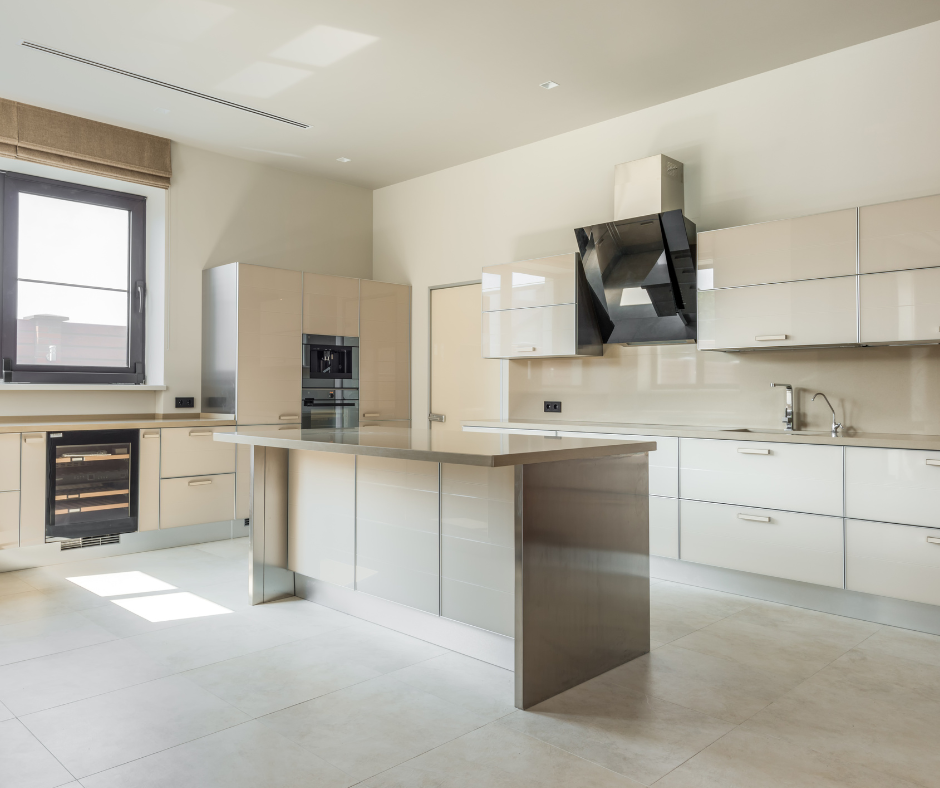
1. Ceramic and Porcelain Tile
Overview: Ceramic and porcelain tiles are among the most popular choices for kitchen flooring due to their durability and water resistance.
Benefits:
- Durability: Both types can withstand heavy foot traffic and are resistant to scratches.
- Water Resistance: Porcelain tiles, in particular, are denser and less porous, making them ideal for kitchens.
- Variety: Available in numerous colors and patterns, they can mimic the look of natural stone or wood.
Considerations:
- Hardness: While durable, tile can be uncomfortable to stand on for long periods.
- Installation: Proper installation is crucial to prevent cracking.
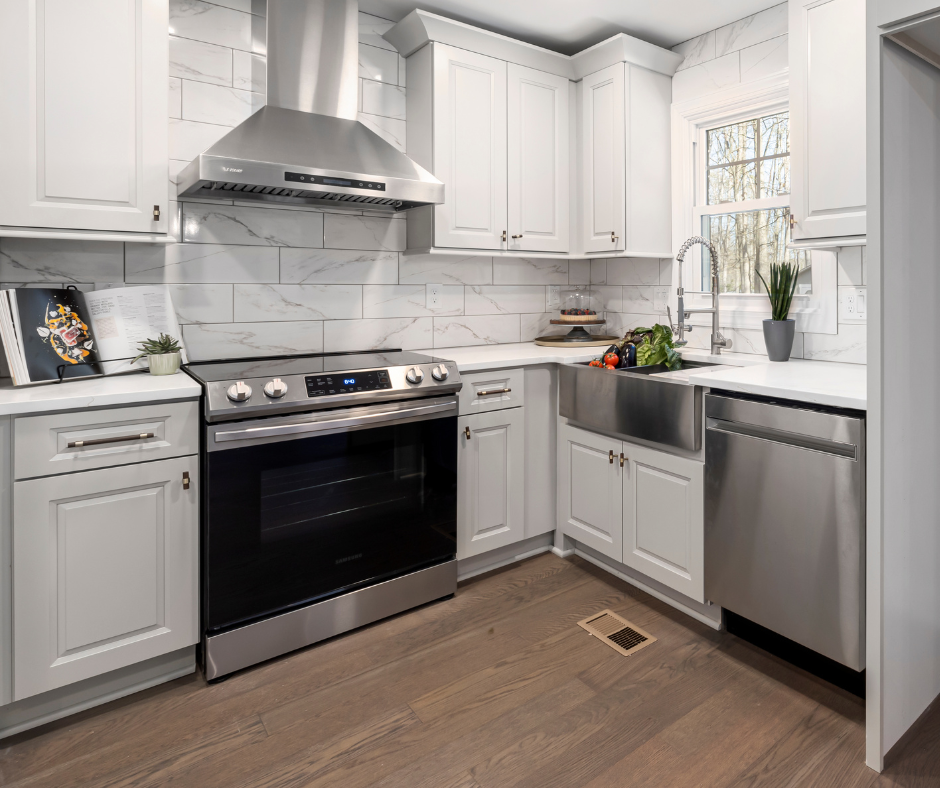
2. Luxury Vinyl Plank (LVP) and Luxury Vinyl Tile (LVT)
Overview: Luxury vinyl flooring has evolved significantly, offering a stylish and resilient option for kitchens.
Benefits:
- Waterproof: Both LVP and LVT are designed to resist moisture, making them suitable for kitchens.
- Comfort: Softer underfoot compared to tile, providing a more comfortable cooking experience.
- Ease of Installation: Many options feature click-lock installation, making them DIY-friendly.
Considerations:
- Longevity: While durable, vinyl may need replacement every decade or so, depending on usage.
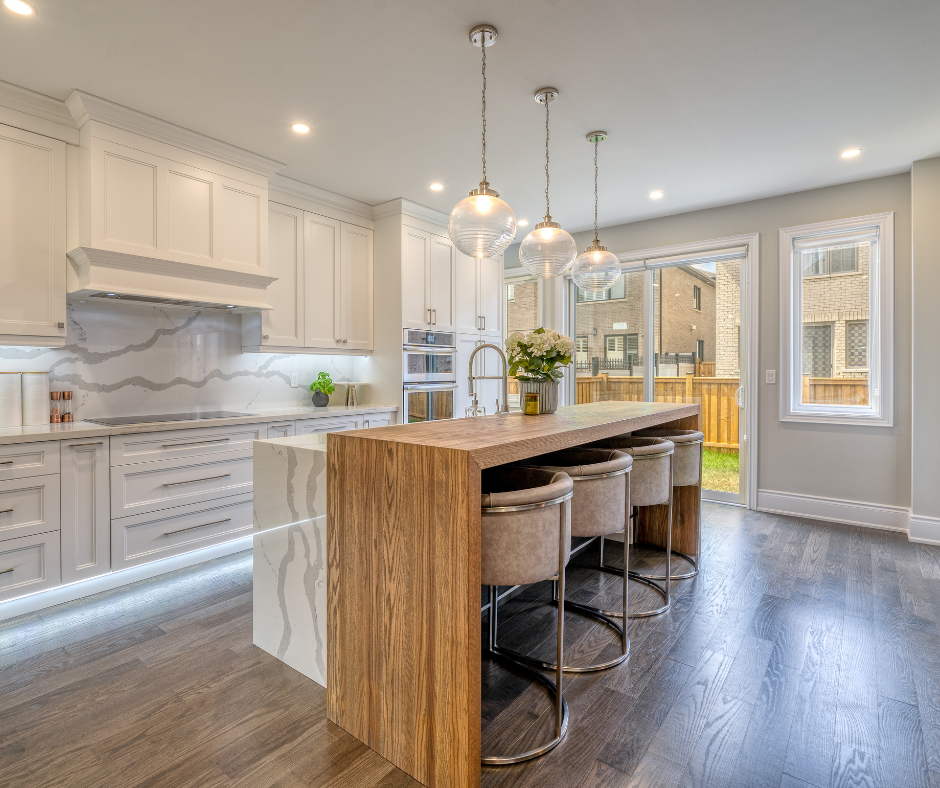
3. Engineered Wood Flooring
Overview: Engineered wood combines the beauty of hardwood with enhanced stability, making it a viable option for kitchens.
Benefits:
- Aesthetic Appeal: Offers the natural beauty of wood, enhancing the kitchen’s warmth.
- Stability: Less susceptible to moisture and temperature changes compared to solid hardwood.
- Refinishing: Can be sanded and refinished multiple times to restore its original look.
Considerations:
- Moisture Sensitivity: While more stable than solid wood, it still requires proper care to prevent water damage.
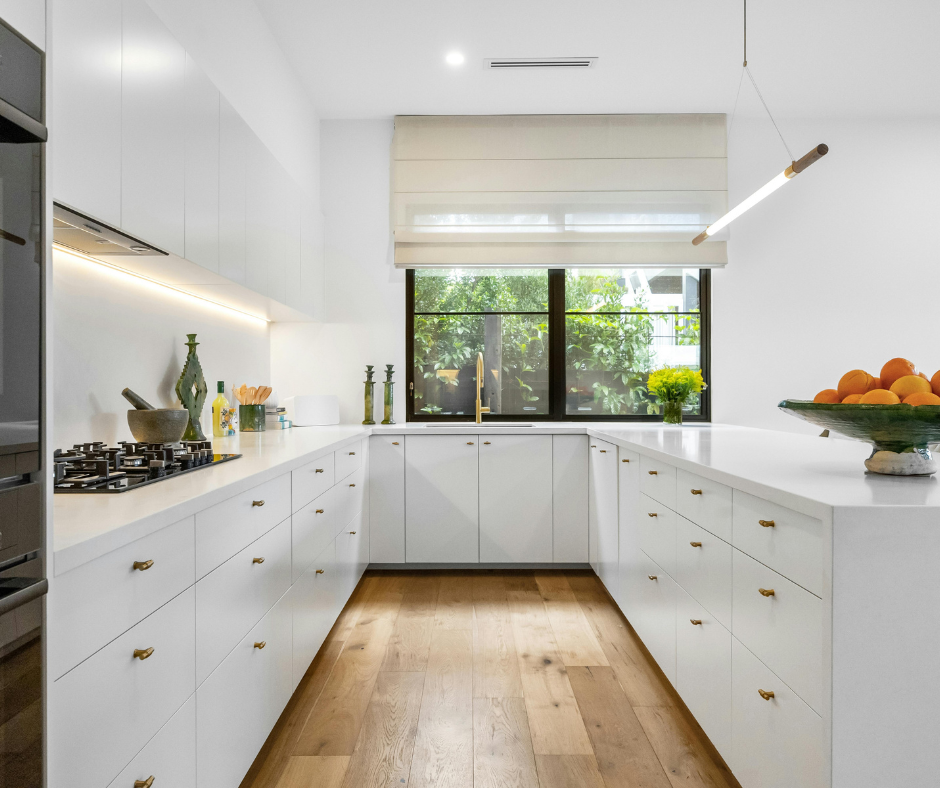
4. Solid Hardwood Flooring
Overview: Solid hardwood is a classic choice that adds elegance to any kitchen.
Benefits:
- Timeless Look: Provides a high-end, luxurious appearance.
- Longevity: With proper maintenance, hardwood can last for decades.
- Refinishing: Can be sanded and refinished to maintain its beauty.
Considerations:
- Moisture Issues: More susceptible to water damage, making it less ideal for kitchens unless properly sealed.
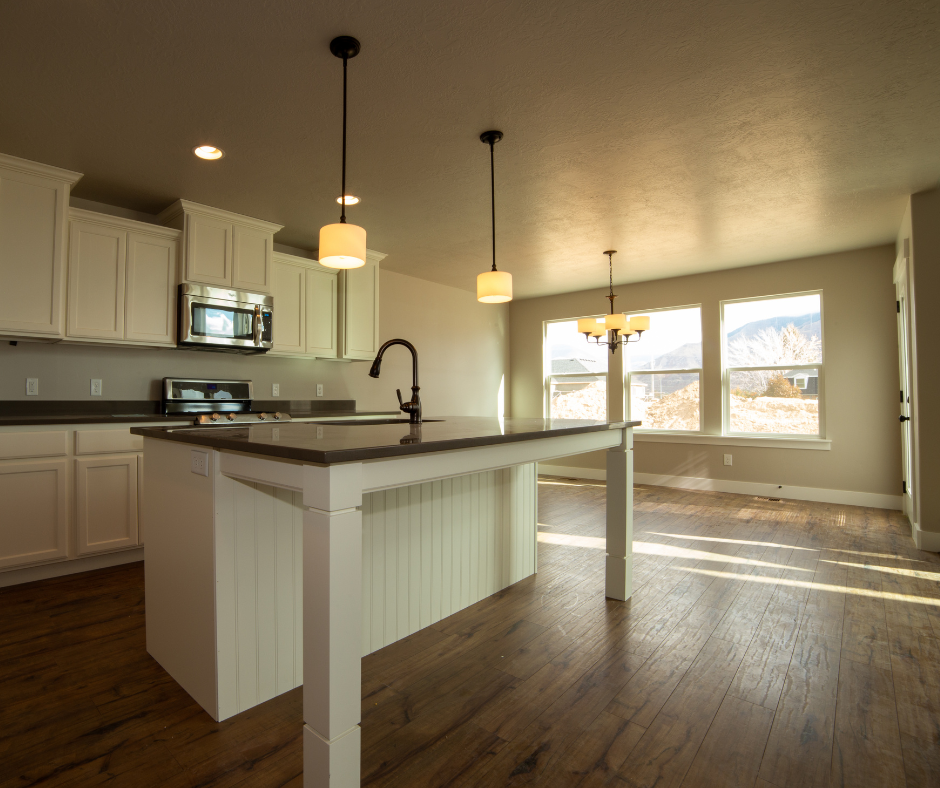
5. Laminate Flooring
Overview: Laminate flooring is an affordable alternative that mimics the look of wood or stone.
Benefits:
- Cost-Effective: Generally less expensive than hardwood or tile.
- Durability: Resistant to scratches and stains, making it suitable for busy kitchens.
- Easy Installation: Often features a click-lock system for straightforward installation.
Considerations:
- Moisture Vulnerability: While it has a water-resistant top layer, prolonged exposure to moisture can damage the core.
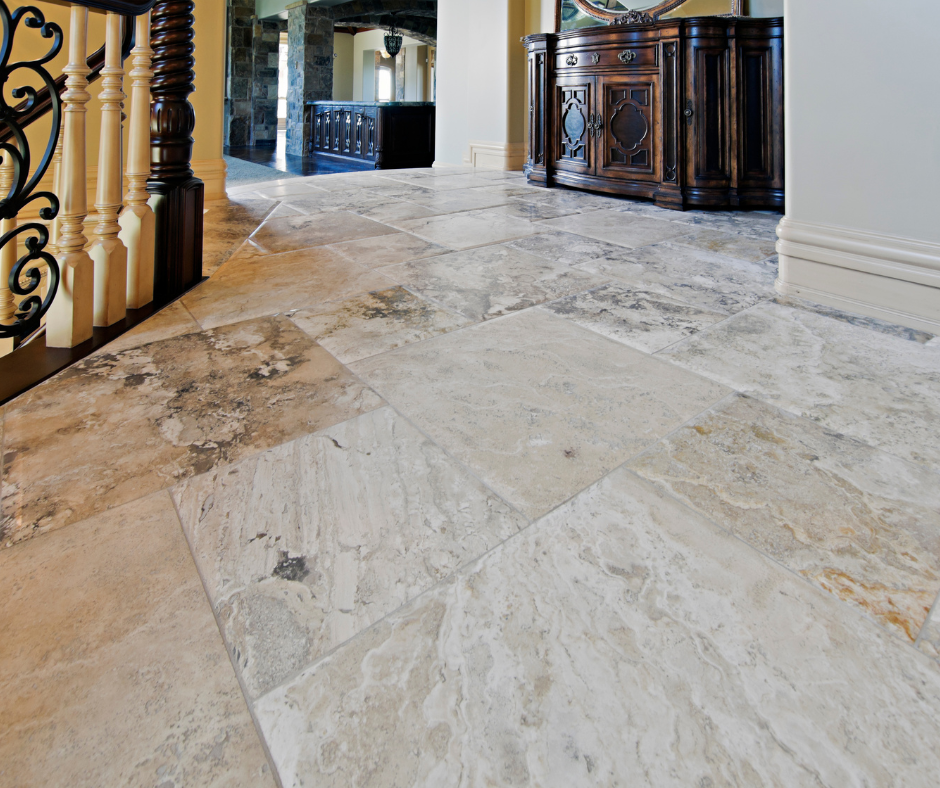
6. Natural Stone Tile
Overview: Natural stone tiles, such as granite, marble, and slate, offer a luxurious and unique look.
Benefits:
- Aesthetic Appeal: Each tile is unique, providing a one-of-a-kind appearance.
- Durability: Stone tiles are incredibly durable and can last a lifetime with proper care.
- Heat Resistance: Ideal for kitchens where hot pots and pans are frequently used.
Considerations:
- Maintenance: Requires regular sealing to prevent stains and moisture penetration.
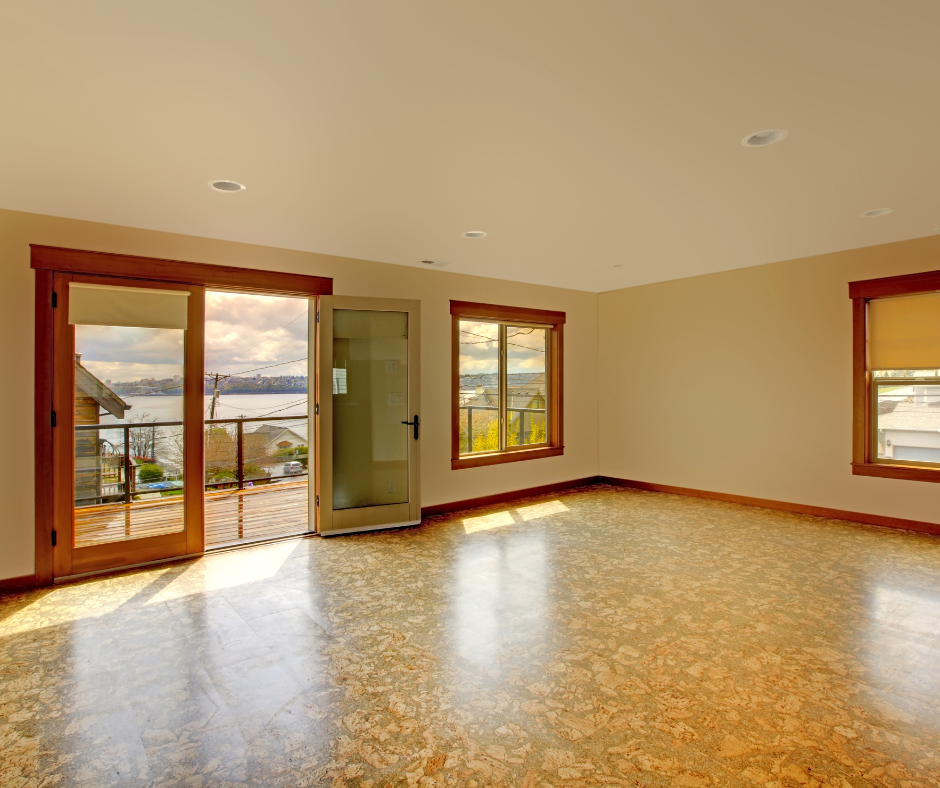
7. Cork Flooring
Overview: Cork is an eco-friendly option that provides comfort and insulation.
Benefits:
- Comfort: Soft underfoot, reducing fatigue during long cooking sessions.
- Sustainability: Made from renewable resources, making it an environmentally friendly choice.
- Insulation: Offers good thermal and acoustic insulation.
Considerations:
- Durability: While comfortable, cork can be susceptible to dents and scratches.

Making the Right Choice
Assessing Your Lifestyle
When choosing flooring, consider your lifestyle and how you use your kitchen. If you have children or pets, durability and ease of cleaning may be your top priorities. For those who enjoy cooking, comfort underfoot and water resistance will be crucial.
Budget Considerations
Your budget will also play a significant role in your decision. While some materials like natural stone and solid hardwood can be more expensive, options like laminate and vinyl offer affordability without sacrificing style.
Aesthetic Preferences
Finally, think about the overall look you want to achieve in your kitchen. Whether you prefer the classic elegance of hardwood, the modern appeal of tile, or the warmth of cork, there’s a flooring option that can complement your design vision.
Conclusion
Choosing the right flooring for your kitchen is a multifaceted decision that requires careful consideration of various factors, including durability, maintenance, water resistance, and style. By understanding the unique characteristics of each flooring type, you can select a material that not only meets your practical needs but also enhances the beauty of your kitchen. Whether you opt for the timeless elegance of hardwood, the modern convenience of luxury vinyl, or the classic durability of tile, the right flooring will transform your kitchen into a functional and inviting space.

Let’s create the perfect kitchen together! If you have any questions or need assistance with flooring installation, feel free to reach out. Your dream kitchen awaits!
More Helpful Tips:
Hardwood Floor Damage Prevention: How to Spot and Fix Common Issues Before They Cost You
Laminate vs. Hardwood Flooring: Pros and cons to help you choose the right flooring for your home
Humidity Control for Hardwood Floors: The Essential Guide to Prevent Cupping and Gapping

How Long Does Hardwood Refinishing Last? Maintenance Tips for Portland and Vancouver's Climate

Water Damage to Hardwood Floors? Our Restoration Process for Vancouver Homes