Parquet flooring styles carry a distinguished history from 17th century France, where intricate wood patterns graced the halls of grand palaces and aristocratic homes. These elaborate geometric designs represented luxury and craftsmanship, requiring skilled artisans to create patterns exclusively featured in Europe’s finest chateaux[-5]. Today’s homeowners are rediscovering what makes this classic flooring option special for contemporary spaces.
The return of parquet flooring connects centuries of proven design with today’s preferences. Modern manufacturers now produce both traditional and updated parquet patterns, making these once-exclusive designs available to more homeowners[-3]. From the popular herringbone pattern to detailed Versailles panels, different types of parquet flooring offer versatility for various home styles[-5]. Current production methods deliver parquet in multiple materials and finishes – from traditional oak to specialty woods – providing flexibility in design and application[-4].
Which parquet style fits your home? We’ll show you why parquet flooring is gaining popularity again, examine the different styles homeowners are choosing, share practical tips for adding parquet to modern design plans, and provide installation and maintenance guidance to keep your floors looking their best for years ahead.
The Return of Parquet: Why It’s Trending Again
Elegant wood patterns we call parquet flooring developed over centuries of craftsmanship. The story from royal exclusive to modern design choice shows how interior design trends come full circle.
A brief history of parquet flooring
The word “parquet” comes from French “parchet,” meaning “a small enclosed space.” Parquet spread across Europe during the 18th and 19th centuries, reaching far beyond the grand Versailles palace. The Industrial Revolution made production more efficient, though installation remained labor-intensive. Late 1800s America welcomed parquet into upper-middle-class homes, especially dining rooms and formal spaces. Those geometric patterns weren’t just beautiful – the interlocking design actually helped minimize wood expansion and contraction problems.
Why parquet fell out of favor
Post-World War II design preferences changed everything for parquet. Mid-century modern style embraced clean lines and simple forms, making ornate wood patterns feel old-fashioned. Wall-to-wall carpeting became the flooring choice homeowners wanted most. Early parquet installations had problems too – poor adhesives failed over time, creating repair headaches. High installation costs and complex processes made parquet less appealing. The 1970s and 80s saw many homeowners actually removing original parquet floors, choosing more contemporary options instead.
What sparked the modern revival
Around 2015, parquet started making its comeback. The vintage revival movement in interior design got people interested in historical elements with modern applications. Pinterest and Instagram showed stunning parquet installations, helping homeowners picture these patterns in their own spaces. Better manufacturing solved old durability issues – improved adhesives and engineered wood options work much better than before. Today’s parquet flooring patterns can include mixed materials like stone and metal, appealing to design-conscious homeowners. Sustainability matters more now too – engineered parquet uses less solid hardwood while delivering similar visual impact.
This return introduced parquet to homeowners who appreciate distinctive character and historical significance in today’s homes.
Popular Parquet Flooring Styles for Today’s Homes

Image Source: Love Chic Living
Today’s interior designers are embracing the rich variety of parquet flooring with fresh enthusiasm. Each pattern offers distinct character for contemporary spaces while honoring centuries of traditional craftsmanship.
Herringbone: The Most Popular Choice
Herringbone stands as the most sought-after parquet style in modern homes. Named for its resemblance to a herring fish skeleton, this pattern arranges rectangular blocks in a distinctive zig-zag formation. Herringbone planks cut into perfect rectangles rather than angles, with each plank’s end touching another’s side. This arrangement provides exceptional dimensional stability as boards push against each other, limiting movement. Modern installations often feature wider planks for bold statements, making spaces feel more expansive and sophisticated.
Chevron: Clean Lines and Movement
Chevron parquet delivers striking striping effects through its diagonal wood pattern. Often confused with herringbone, chevron differs by cutting planks at precise angles, meeting in perfect points like continuous arrow patterns. This creates clean, symmetrical lines that add movement and architectural refinement. The pattern draws eyes forward, creating illusions of larger spaces. Designers frequently choose chevron to make smaller spaces feel dynamic and architecturally distinguished.
Basketweave: Understated Elegance
Basketweave design arranges planks of even width into patterns resembling woven baskets. This interlocking pattern creates depth and visual interest without overwhelming spaces. Typically crafted from single-shade, light-colored wood planks, some homeowners select darker or contrasting colors for unique appearances. Variations include double basketweave and square basketweave options. This timeless pattern adds sophistication to any room through its textured, dimensional quality.
Versailles: Historic Grandeur
Invented in the seventeenth century, Versailles parquet features interlaced diagonals and square panels. Made famous by replacing marble floors in the Palace of Versailles, this historic pattern required expert hand-assembly without glue. Modern Versailles panels are typically crafted from engineered European oak in various finishes and tones. The distinctive geometric layout creates visual depth and elegance, making these panels perfect for grand entrances, formal dining rooms, or boutique commercial spaces.
Brickwork: Simple Structure
Brickwork parquet mimics traditional brick wall layouts with clean, organized appearances. This straightforward pattern features rectangular blocks of identical sizes arranged in offset rows. Despite its simplicity, brickwork parquet creates striking effects that work exceptionally well in rooms longer than wide, such as hallways. For enhanced visual interest, various grains and shades can be incorporated. The pattern offers multiple installation options, including traditional centered layouts or staggered arrangements.
How to Make Parquet Floors Look Modern
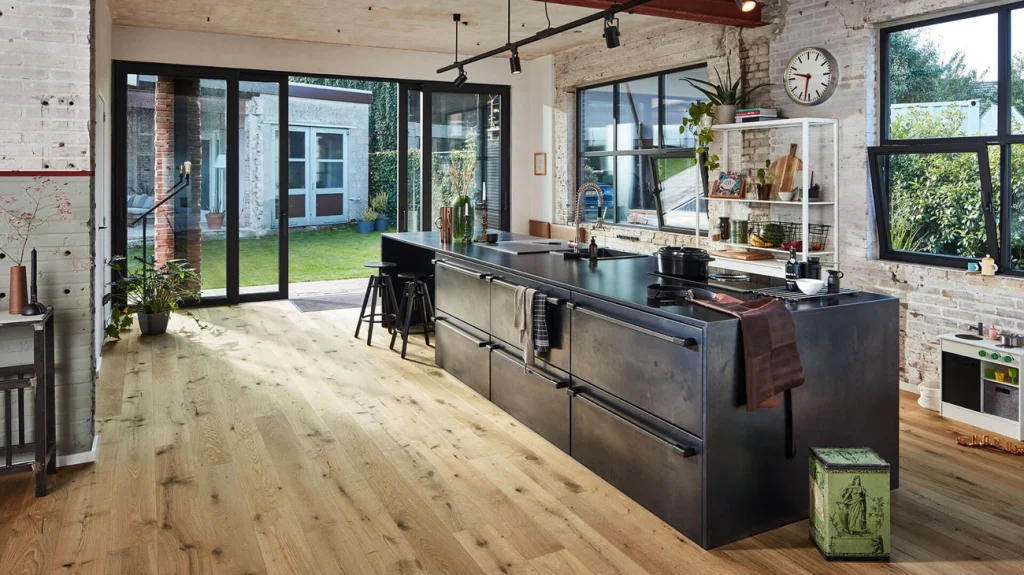
Image Source: MEISTER
Creating a contemporary look with traditional parquet starts with smart design decisions. Today’s homeowners are discovering how this classic flooring option can blend beautifully with modern esthetics.
Choosing the right wood tones and finishes
Light wood tones like maple, ash, or fir open up spaces and create that clean, airy feeling homeowners love. Oak offers incredible versatility – it works with almost any design style you’re considering. Want drama? Darker shades like walnut or smoked oak add depth and create sophisticated spaces. Matte finishes give you that contemporary edge instead of traditional glossy surfaces. Neutral stains in light grays, whites, or taupe work perfectly with today’s interior trends.
Pairing with minimalist or industrial decor
Parquet floors become stunning focal points when you pair them with clean-lined furniture and uncluttered rooms. Those black and white color schemes make parquet’s geometric patterns really pop. Industrial loft styles with leather, metal, and exposed brick create beautiful contrast with wood floors. Keep furniture minimal – let your floor patterns take center stage.
Using larger tiles or mixed materials
Oversized planks (like 240 x 2200 mm formats) create that elegant, spacious look modern homes need. We’re seeing homeowners combine parquet with materials like concrete, glass, or stone for striking transitions between spaces. These combinations help define different zones in open-concept layouts while keeping everything connected.
Adding custom inlays or borders
Custom medallions and inlays turn standard floors into something truly personal. These details can feature family crests, business logos, or artistic designs that reflect your style. Strategic borders frame rooms beautifully and create that polished, tailored appearance. Wood medallions typically feature 3/8″ solid wood layers glued to Baltic Birch plywood for stability.
Let us help you create the perfect modern parquet design for your space.
Upgrade Your Home with Local Experts!
Forget the impersonal experience of big box stores. Our skilled craftsmen are ready to install any custom flooring, stairs, and trim you need – from hardwood to tile and beyond. Proudly serving Vancouver, Portland, Camas, Ridgefield, and surrounding areas.
Installation and Maintenance: Professional Guidance for Long-lasting Results

Image Source: KHB Flooring
Beautiful parquet floors start with proper preparation and professional installation. Regular care and maintenance keep these distinctive patterns looking their best for decades to come.
Subfloor preparation requirements
Your subfloor assessment determines installation success. Acceptable materials include 0.75-inch plywood, oriented strand board, concrete, or solid wood. Level surfaces are essential—if a coin slips under a 2-meter straight edge, leveling compound is required. Moisture testing cannot be overlooked, with concrete slabs needing below 0.5% moisture content and room humidity maintained between 45-60%. Porous subfloors require SBR primer sealing before installation.
Professional installation makes the difference
Geometric patterns demand precision that DIY approaches rarely achieve. Each piece must align perfectly—one misplaced block affects the entire floor pattern. Professional installers use specialized tools and proven techniques for superior results. Most installations include warranties, protecting your flooring investment.
Daily care and protection methods
Sweep or vacuum daily using soft floor attachments to prevent surface scratches. Use cleaning products designed specifically for your floor finish—varnished floors need different care than oiled surfaces. Avoid water washing or ammonia-based cleaners. Furniture pads and entrance doormats provide essential protection.
Refinishing timing and process
Signs like multiple scratches, lost shine, or water damage indicate refinishing needs. The water test reveals timing—if water absorbs rather than beads, schedule refinishing. The refinishing process starts with coarse-grit diagonal sanding, progressing through finer grits. Thorough vacuuming between each sanding prevents swirl marks.
Ready to Explore Parquet for Your Home?
Parquet flooring represents timeless design that connects centuries of proven craftsmanship with today’s preferences. These geometric patterns have made the journey from royal palaces to modern homes, providing versatility for current interior spaces.
The renewed interest in parquet reflects our appreciation for authentic materials and quality craftsmanship in our homes. From classic herringbone elegance to sleek chevron lines or textured basketweave appeal, parquet offers numerous ways to express your personal style.
Modern production techniques have solved past concerns, making parquet more durable and accessible than before. Larger planks, mixed materials, and custom inlays expand design options while keeping the distinctive character that makes parquet special.
The beauty of parquet flooring depends on proper installation and maintenance. Professional installation ensures precise alignment of intricate patterns, while regular care preserves their beauty for decades. Quality installation protects your investment through extended floor life and enhanced home value.
Since opening in 1996, we’ve seen the remarkable return of parquet flooring firsthand. Our team specializes in guiding homeowners through the complete process – from selecting the right pattern and wood tone to professional installation and maintenance guidance.
Parquet flooring offers more than a surface to walk on. These geometric patterns create visual interest while telling a story of design heritage that elevates any space. After years of being overlooked, parquet has earned its place as a distinctive flooring choice that balances historical elegance with contemporary appeal.
Let’s create the perfect parquet solution for your home. Contact us today to schedule your free consultation and explore how these beautiful patterns can enhance your living space.
Ready to restore your home’s original character?
Let’s bring those historic details back to life!
Your historic home deserves trim that tells its authentic story. We take time to research, plan carefully, and execute with precision. The resulting beauty and historical accuracy will reward your efforts for generations to come.
FAQs
Q1. What is parquet flooring and why is it making a comeback? Parquet flooring is a type of wood flooring featuring geometric patterns. It’s experiencing a revival due to improved manufacturing techniques, a renewed interest in vintage design elements, and its ability to add character to modern interiors.
Q2. What are some popular parquet flooring styles? Popular parquet styles include herringbone, chevron, basketweave, Versailles, and brickwork patterns. Each offers a unique look, from classic elegance to modern sophistication.
Q3. How can I make parquet flooring look modern? To modernize parquet flooring, consider using lighter wood tones, matte finishes, larger planks, or mixing materials. Pairing it with minimalist or industrial decor can also create a contemporary look.
Q4. Is parquet flooring difficult to maintain? While parquet requires regular care, it’s not overly difficult to maintain. Daily sweeping or vacuuming, using appropriate cleaning products, and protecting the floor from scratches are key to preserving its beauty.
Q5. Should I hire a professional to install parquet flooring? Professional installation is highly recommended for parquet flooring. The intricate patterns require precise placement, and professionals have the expertise and tools to ensure a high-quality, long-lasting installation.
More Helpful Tips:

Hardwood Floor Damage Prevention: How to Spot and Fix Common Issues Before They Cost You
Laminate vs. Hardwood Flooring: Pros and cons to help you choose the right flooring for your home

Humidity Control for Hardwood Floors: The Essential Guide to Prevent Cupping and Gapping

How Long Does Hardwood Refinishing Last? Maintenance Tips for Portland and Vancouver's Climate

Water Damage to Hardwood Floors? Our Restoration Process for Vancouver Homes